
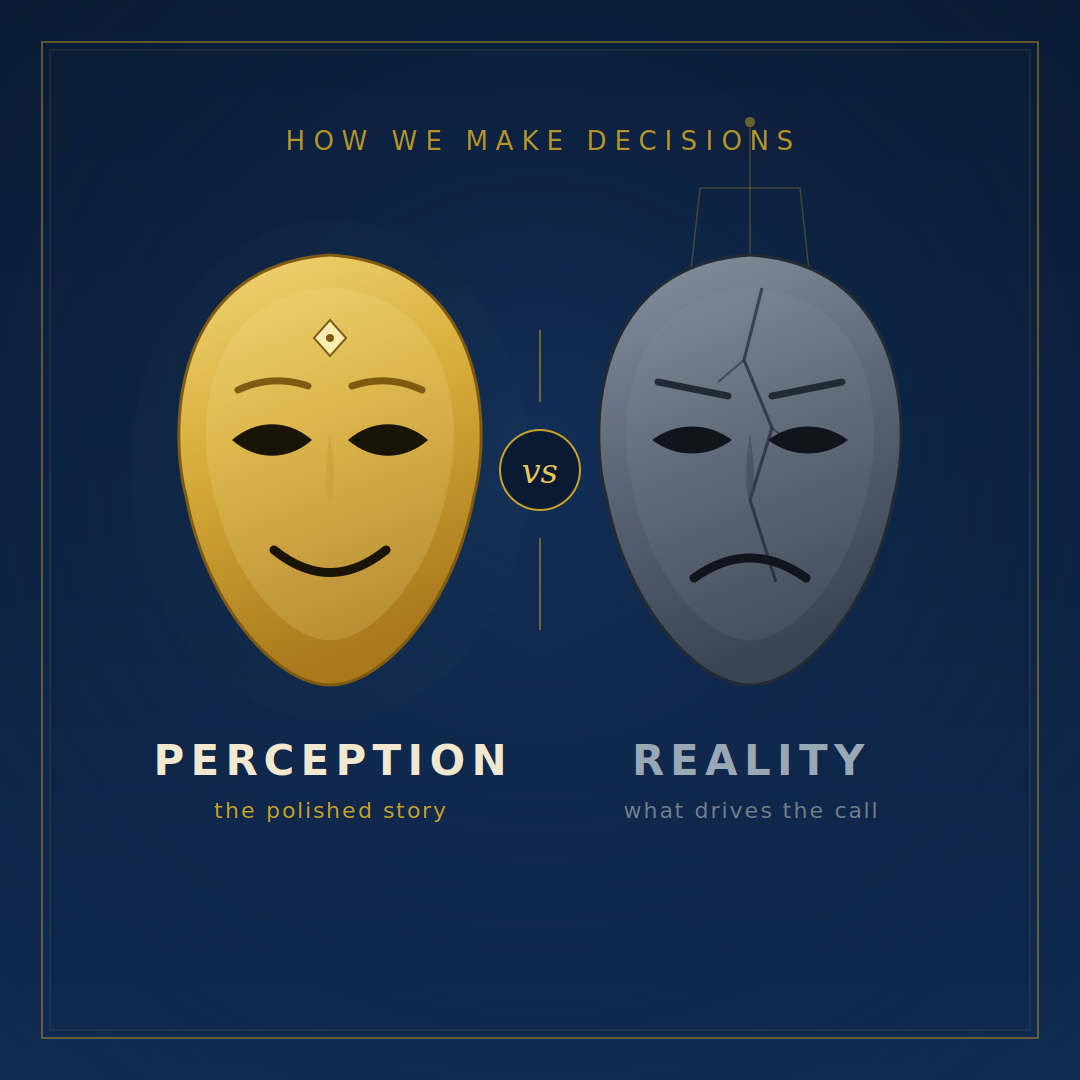
"Perception is
reality." I have heard it offered as workplace wisdom in more meeting
rooms than I can count, usually right before someone makes a call they cannot
defend with anything else. A former colleague used to quote that line to me as
his decision rule.
But watch what the same people
do when the decision is theirs to live with.
They tour the house three
times before they sign the agreement. They run their checks on the school
before enrolling a child. They take their time, ask hard questions and confirm
before committing to a marriage. When the cost of being wrong lands on them,
perception is never enough. Evidence is.
So why, when the cost falls on
a colleague, a team, or an entire organisation, does perception suddenly become
a sufficient basis for a decision?
To be fair, perception has its
place. Branding, positioning, market sentiment, holding morale steady through a
difficult transition: these are real jobs that perception does well and a
leader who ignores how things are received pays for it. But that is perception
facing outward, toward how the market and the public read you. The error is
importing that same logic inward, into decisions about people, capability, risk
and compliance, where what is actually true is the only thing that protects
you.
A perception is a prompt to
investigate not the conclusion of an investigation. Treating someone's
impression as established fact is how capable people get quietly mislabelled,
how sound proposals get killed in the room and how organisations absorb risk
that nobody ever actually examined. The damage is rarely loud. It compounds.
We owe each other a higher
standard. Decisions that shape livelihoods and the health of an institution
deserve a clear, verifiable basis, not the mood of whoever happens to feel most
strongly that day.
Here is a mitigant that works,
drawn from controls we already rely on every day.
Apply the four eyes principle:
no perception drives a decision about a person until a second, independent
reviewer who had no hand in forming it has tested it.
Subject the perception to
disconfirmation: state it as a falsifiable claim and ask what evidence would
prove it wrong, rather than gathering only what confirms it.
Keep a decision record, so the
basis can be revisited and audited later rather than lost to memory and mood.
If a perception survives independent challenge and a genuine attempt to disprove it, you have a finding. If it does not, you had a feeling.